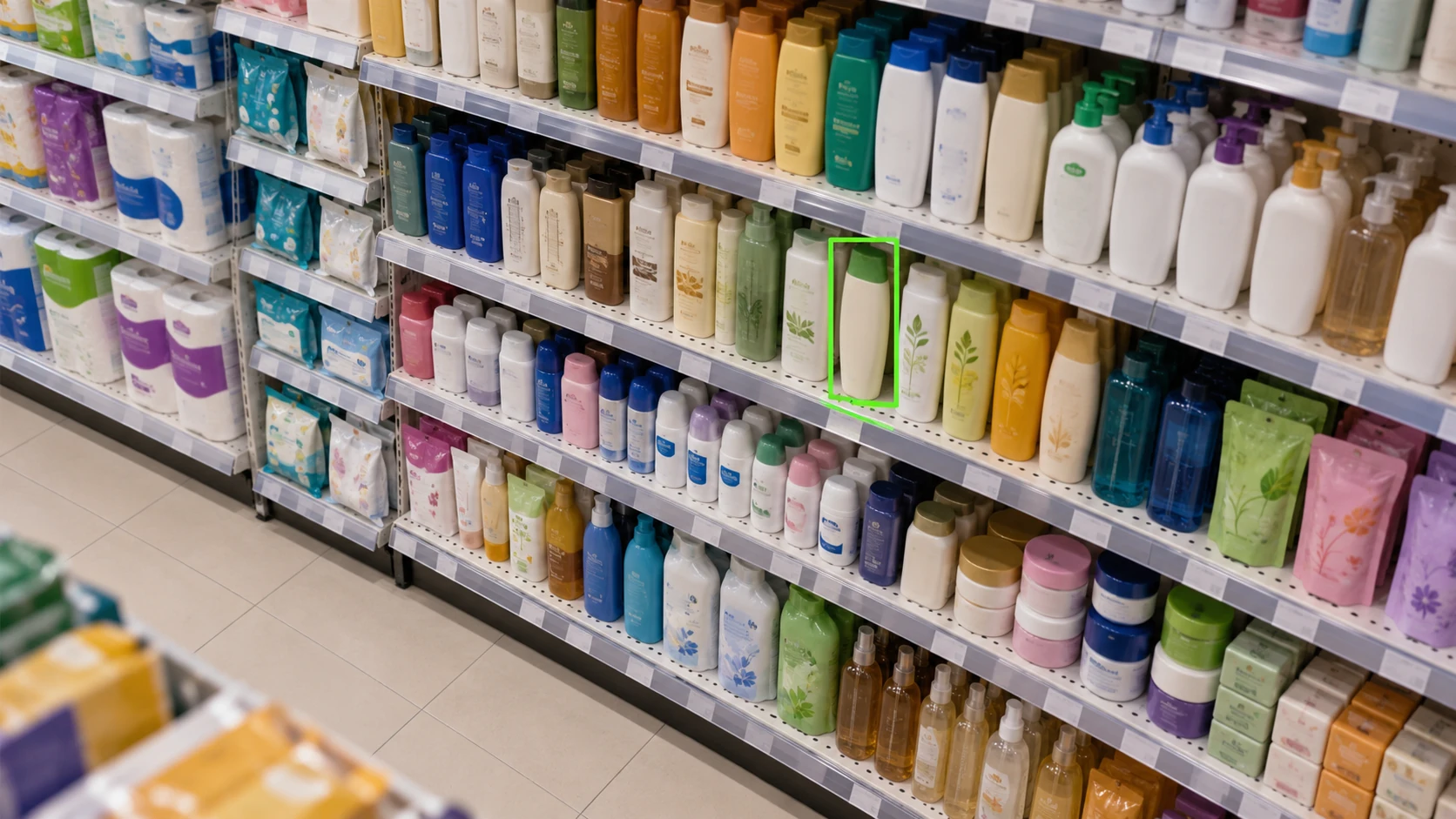
Inventory records that a product exists. The shelf makes it possible to check whether it is within the shopper's reach. Between those two moments lies a part of commercial operations that can also become information. In Venezuela and Central America, Quarks works alongside Trixo with video cameras and computer vision to provide analytics for supermarket and pharmacy operations whose identities remain confidential.
The case connects Venezuelan retail with an application of artificial intelligence that already has an international track record: observing displays and extracting signals that help review replenishment or product distribution. Its usefulness depends on image quality, what is chosen to be measured and how that information is subsequently used.
A local application within a regional conversation
CENIA's summary of ILIA 2026 puts AI use at 27.6% of large companies in the region, 12.8% of medium-sized companies and 6.8% of small companies. These are regional figures from the report, useful for contextualizing productive adoption that progresses unevenly according to company size.
Within that conversation, the shelf represents a clearly defined problem. Management needs to know what is happening on the sales floor and have information to coordinate operations. Computer vision adds a data source to that task, with a scope that must be adapted to each store.
Outside the region, there are examples of this application at a larger scale. In April 2025, Focal Systems reported on its deployment of shelf cameras at Morrisons in the United Kingdom. Shelf analysis thus sits within a commercial application with international reference points.
From video to an operational question
Shelf analysis uses images to examine the visible state of a display. Depending on its configured and validated scope, it can support identifying gaps, tracking product presence or analyzing visible facings. Comparing a display with a planogram requires having that reference and a capture that allows the review to be carried out.
An image describes what can be observed from the camera. To understand a product's availability throughout an operation, that information can be complemented by the catalog and inventory records. This relationship makes it possible to formulate questions about replenishment, placement and recurring empty spaces.
In the regional collaboration, Quarks contributes capabilities in data and artificial intelligence, while Trixo adds experience in trade marketing and technology applied to the point of sale. The combination brings technical development close to retailers' questions. Store configurations and operational results remain private.
Recognizing a product requires a technical foundation
Distinguishing products on a shelf presents difficulties well known to computer vision research. The work of Tonioni, Serra and Di Stefano on product recognition describes challenges such as visually similar packaging, differences between catalog and in-store images, and changes in presentation. These conditions help explain why image capture and the catalog influence the analysis.
For a data science team, evaluation must consider images other than those used to fit the model. It must also examine what happens when relevant store conditions change. The goal is to understand the system's behavior within the environment where its information is needed.
An incorrect alert can consume staff attention; a gap that goes unnoticed can delay a review. Analyzing both errors makes it possible to discuss the level of performance the operation requires. The decision depends on the importance of each situation and the team's capacity to address it.
Quantitative talent connects the model with the business
Quarks brings together statisticians, data scientists and actuaries with experience in retail and market research. That combination makes it possible to address questions spanning several disciplines: how to define what is measured, how to validate a model and how to interpret the uncertainty of an observation within commercial operations.
Statistics provides criteria for evaluating data and performance. Data science organizes image processing and analysis. Actuarial science helps study scenarios and consequences under uncertainty. Retail experience connects that work with categories, displays and store processes.
The NIST AI Risk Management Framework includes the design, development, use and evaluation of systems within a perspective of trustworthiness. For a commercial analytics project, that reference reinforces the importance of examining the tool in the context where it is used.
Venezuela as a place for application and capability development
The significance of Quarks and Trixo's work lies in a capability already applied to retailers in Venezuela and Central America: turning point-of-sale images into analytical information. This experience offers a view of the country through its technical teams and the business problems they are addressing alongside a regional partner.
For a company evaluating retail AI in Latin America, a project's value starts with defining an operational question and a way to measure its usefulness. Visible availability, recurring gaps and attention to observations are examples of indicators that can be agreed upon. Their evolution must be verified in each operation.
Regional work offers Quarks a space to connect theoretical training with commercial execution. The same ability to frame questions and evaluate evidence appears in another area of its activity: market research from Venezuela for global brands.
The application of cameras and shelf analysis is explored in the retail AI case study of Quarks and Trixo. Its relationship with inventory analytics can also be explored.