A global phone brand needs to understand how its products fit into the lives of the people who buy them. In Venezuela, Infinix works with Quarks on research that combines quantitative and qualitative evidence to support business decisions. The relationship offers a view of the country through a concrete activity: producing consumer knowledge for an international company.
The significance of that experience extends beyond the smartphone category. For a company operating across countries, commercial expansion requires interpreting local realities. For a Venezuelan research team, answering those questions calls for a method that can be explained, reviewed and used in a business discussion.
The regional context helps situate that task. Published on October 20, the 2026 Latin American Artificial Intelligence Index by ECLAC and CENIA examines the ecosystems of 20 countries and addresses enabling factors, research, development and adoption, and governance. That perspective connects the technology discussion with concrete capabilities in talent and application.
A global brand needs local questions
A product designed for several markets reaches consumers with different routines and frames of reference. Market research makes it possible to study how those experiences relate to perceived value and purchasing decisions. Local knowledge is useful when it helps frame better questions and interpret the answers.
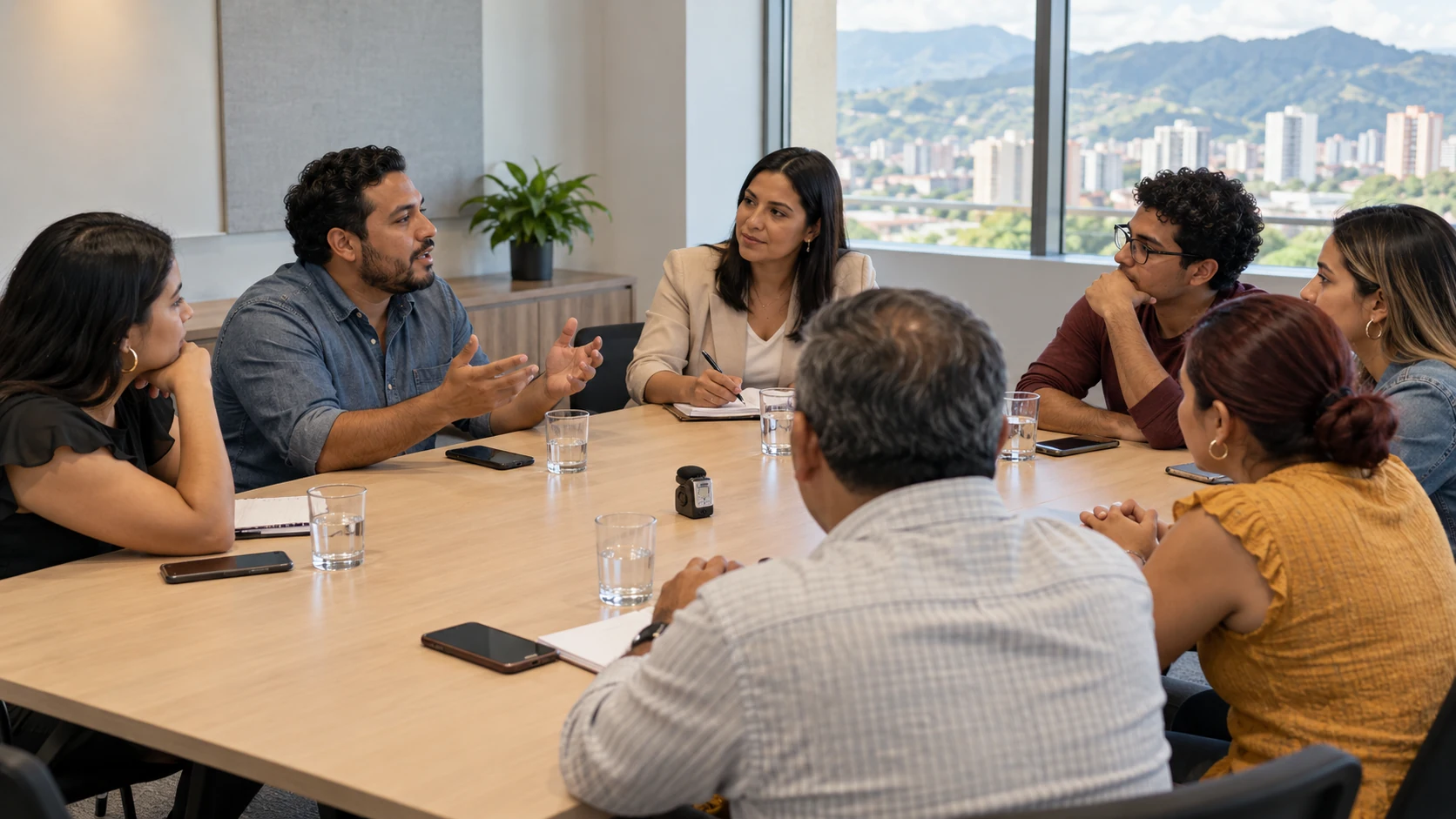
In its work with Infinix, Quarks connects surveys and discussion groups with analysis oriented toward business teams' needs. Surveys make it possible to examine patterns across the responses collected. Qualitative discussion brings reasons and nuances that require attention to understand those patterns. Findings, evaluated products and participants' data remain confidential.
For an international brand, that combination provides a bridge between its offering and the market's experience. Research can help examine assumptions about products or communication before turning them into decisions. The scope of each conclusion depends on the study design and the available evidence.
Method is part of commercial value
A survey distributed online does not become nationally representative simply by accumulating responses. AAPOR's best practices for survey research distinguish between probability and nonprobability samples and emphasize methodological transparency. For anyone receiving a report, knowing how participants were selected is essential to interpreting what its results describe.
A similar consideration applies to a focus group. Its usefulness lies in exploring experiences, language and motivations in depth. Generalizing a conversation to an entire country requires additional evidence. In well-designed research, commercial questions and the choice of method move together: the analysis must answer what the design can support.
Working with internationally relevant professional criteria also requires documenting how information is obtained and used. The 2025 revision of the ICC/ESOMAR Code addresses the use of AI, transparency and human oversight. That framework provides a reference for the sector; a project's quality is assessed through its methodological decisions and execution.
Technical capability also lies in people
Quarks brings together statisticians, data scientists and actuaries with experience in retail and market research. These are complementary professional profiles for an activity that combines question design, information processing and the assessment of uncertainty.
Statistics makes it possible to examine the relationship between the collected data and the population to be understood. Data science provides tools for organizing sources and analyzing structured and qualitative information. Actuarial training adds a way of studying variability, scenarios and risk, useful when an organization must decide with incomplete information.
Retail knowledge connects those capabilities with questions about categories, displays and purchasing behavior. Its contribution becomes clear when a team can explain why an observation matters to the business and what additional information would allow it to be examined more closely.
Technology expands the work of research
Across the sector, current data and language processing tools can support tasks such as organizing interview material or classifying large volumes of text. Reviewing categories, interpreting responses and assessing their limitations still require professional judgment.
The theoretical foundation makes it possible to evaluate these tools' results. An automated classification must correspond to the concept being studied; a relationship between variables requires an interpretation that respects the research design. That discipline helps keep the analysis connected to the question that prompted it.
A way of viewing Venezuela through its capabilities
The experience with Infinix shows a Venezuelan team working on a global brand's need. Its value as an example lies in the capabilities it combines: market knowledge, quantitative training and research execution. It makes it possible to discuss Venezuela as a place from which useful evidence is built for international companies.
For Latin America, developing that capability opens opportunities to participate in projects that require understanding consumers and explaining decisions with data. The work is assessed by the clarity of its questions, the quality of its execution and the usefulness of its analysis for those who must decide. This is where Quarks finds its role as a market research partner in Venezuela.
The experience is explored in the case study of Quarks' market research for Infinix. Another application of that talent to commerce can be seen in the analysis of retail AI and shelves in Venezuela and Latin America.